Slot Volatility Explained: Why Your Bankroll Keeps Dying
You load a slot, spin for twenty minutes, and your balance is gone. Meanwhile, a friend plays the same game and triples their deposit in ten minutes. Before you blame the algorithm, the casino, or your lucky socks, you need to understand one thing: volatility. It's the single most misunderstood concept in iGaming, and it explains almost every frustrating session you've ever had.
Volatility (sometimes called variance) is the measure of how wildly a game pays out relative to its average. It has nothing to do with whether a slot is "rigged" or "due" for a win. It's a mathematical property baked into the paytable and the random number generator, and once you grasp it, you can stop fighting games that were never suited to your style in the first place.
What Volatility Actually Means (Without the Jargon)
Every slot has a theoretical Return to Player, usually between 94% and 97%. That number tells you what percentage of all wagered money gets returned to players over millions of spins. What it doesn't tell you is how that money comes back. A low-volatility slot trickles it back in small, frequent wins. A high-volatility slot hoards it and dumps it in rare but enormous bursts.
Think of two vending machines. One gives you a candy bar every third coin. The other eats twenty coins, then occasionally coughs up a whole box of candy bars. Both might have the same total payout over a year. Your experience in any given afternoon, though, will be completely different. For more on this, see kqbd.
Here's a rough breakdown of how the categories behave:
- Low volatility: frequent small wins, gentler swings, ideal for stretching a small bankroll.
- Medium volatility: a balanced mix, with occasional wins of 20x to 50x your stake.
- High volatility: long dry spells punctuated by wins of 500x, 1000x, or more.
- Extreme volatility: brutal dead spins for hours, with the promise of a 10,000x jackpot lurking somewhere.
If you've ever played a game like Book of Dead or San Quentin and felt personally attacked, you were probably playing high volatility with a low-volatility bankroll. That mismatch is where the pain comes from.
The Bankroll Math That Changes Everything
Here's a practical rule that experienced players use: your bankroll should be at least 100 to 200 times your average bet on a high-volatility slot. If you're spinning at $1 a spin on a 10,000x max-win game, you'd want $200 or more just to survive the cold streaks long enough to reach a bonus.
Let's make that concrete. Say you deposit $50 and bet $1 per spin on a medium-volatility slot. That's 50 spins. Sounds fine, right? But a high-volatility game can easily go 200 to 300 spins without a meaningful win. At $1 a spin, you'd need $300 just to give the game a fair chance at doing its thing.
The takeaway isn't "deposit more." It's match your bet size to your bankroll and the game's volatility. If you have $50, either play low-volatility slots at $0.20 to $0.50 per spin, or accept that you're paying for entertainment, not a realistic shot at a big multiplier.
Why Table Games and Poker Sit in a Different Universe
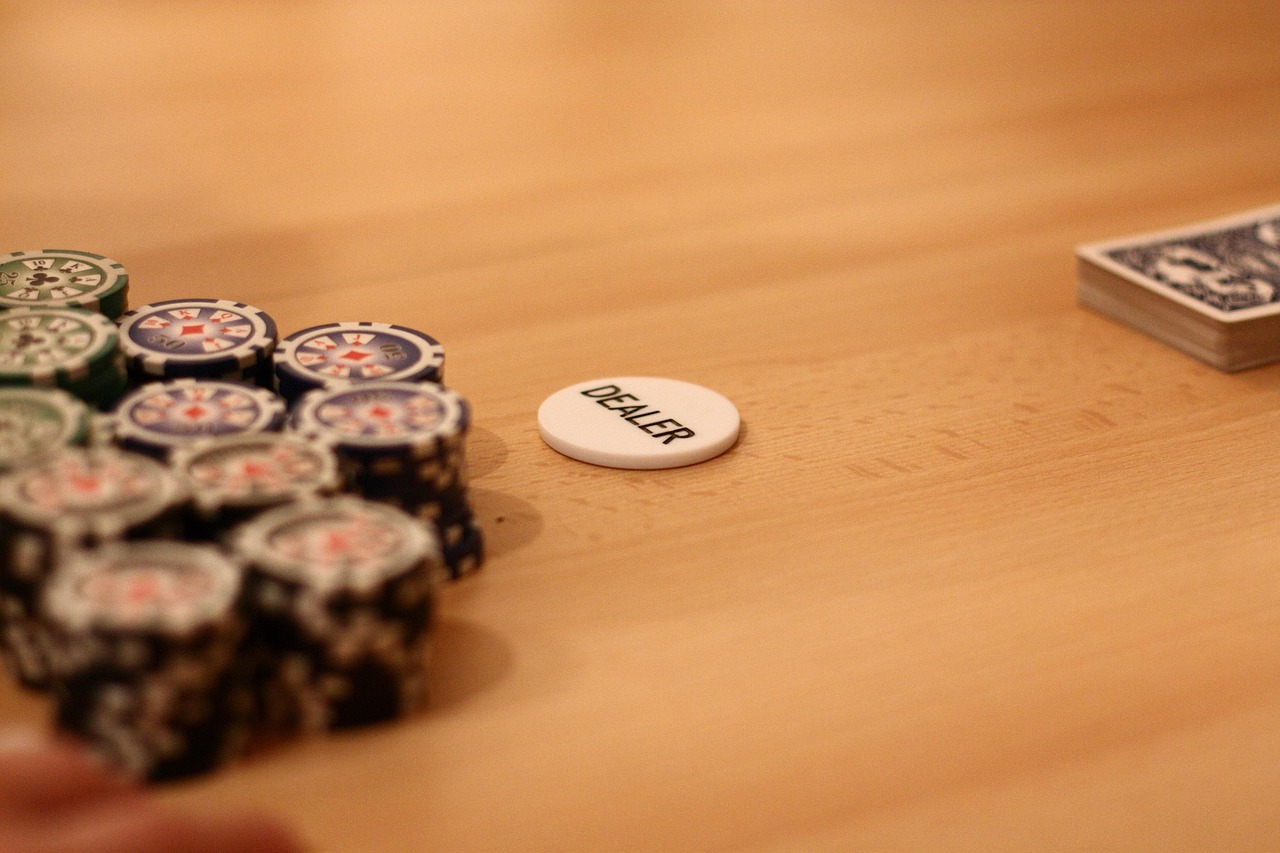
Slots are a pure game of chance with fixed odds. Poker is not. In Texas Hold'em, you're competing against other players, not the house, and the only built-in edge is the rake. That means volatility in poker comes from variance in hand distribution and your opponents' decisions, not from a paytable.
A skilled poker player can be profitable over thousands of hands while still losing for weeks at a time. That's variance. The difference is that skill shifts the long-term expectation in your favor. In slots, no amount of skill changes the RTP. You can only control how you play, not the odds themselves.
Blackjack and baccarat sit somewhere in between. With basic strategy, blackjack's house edge can drop below 1%, but the game still has high short-term variance. Baccarat is almost pure luck, with a banker bet carrying about a 1.06% house edge. None of these games have the explosive volatility of a modern video slot, which is exactly why some players prefer them.
Reading Volatility Before You Spin
You don't have to guess. Most reputable casinos publish volatility ratings, and third-party sites track them across thousands of titles. Here's a quick checklist before you commit real money:
- Check the max win. Anything advertising 10,000x or more is almost certainly high volatility.
- Look at the RTP and hit frequency. A hit frequency below 20% usually signals a bumpy ride.
- Test with demo play. Spin 100 times for free and note how often you win. You'll feel the rhythm within minutes.
- Read the paytable. If most wins come from five-of-a-kind symbols and the bonus round, expect long gaps.
- Start small. Begin at the minimum bet and only increase if the game is actually feeding you wins.
That fifth point matters more than people admit. Chasing a bonus round by raising your bet after a dry spell is how bankrolls evaporate in twenty minutes.
Streamers, Big Wins, and the Highlight Reel Trap
Slot streamers make high-volatility games look like money printers. What you don't see is the $5,000 deposit that funded the session, or the five previous sessions that went nowhere. A 5,000x win on a $2 spin is a $10,000 payout, yes, but it might have taken 40 hours of dead spins to hit.
This is the survivorship bias of iGaming. The wins get clipped and posted. The losses get edited out. If you model your play on highlight reels, you'll set expectations that no bankroll can meet.
Final Thought: Play the Game You Can Afford to Lose
Volatility isn't good or bad. It's a personality trait of a game, and your job is to find the one that matches your patience, your budget, and your tolerance for dry spells. If you love the thrill of a potential 10,000x multiplier, play high volatility with a bankroll built for it. If you want steady entertainment, play low volatility and enjoy the ride.
The players who last aren't the ones with the best luck. They're the ones who understand the math, pick games that suit their money, and never bet more than they can shrug off. Master that, and you'll get far more out of every session than any hot streak could ever give you.